

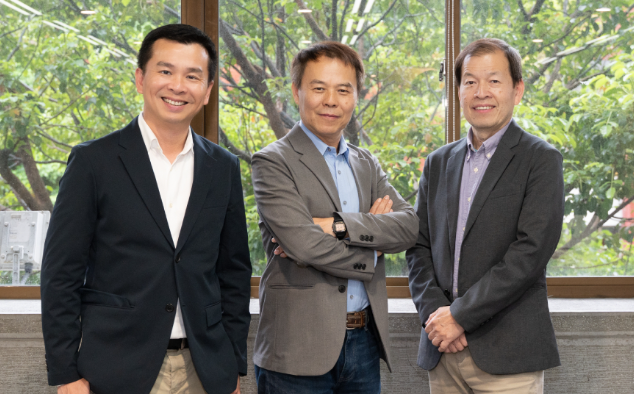
In the face of a rapidly changing society, the market demand for health and LOHAS has gradually become a prominent trend. Accompanying enterprises must also advance with the times. For mature individuals navigating corporate changes, only health can stabilize their physical strength, brainpower, and mental state to adequately handle various business and life challenges. At the same time, this builds the foundation for business owners’ public welfare and personal influence. The NTNU LOHAS EMBA was created in response to these exact needs.
“In your 50s, you don’t necessarily need to pursue something, but rather become someone who can let go with peace of mind,” said Chair Professor Tsung-Min Hung of the NTNU LOHAS EMBA. As the first EMBA program in Taiwan featuring the concept of “LOHAS”, Professor Hung stated that he hopes to not only deliver the business management knowledge emphasized in traditional EMBAs, but also integrate a learning journey encompassing health behaviors, scientific exercise, innovative design, and sustainable values. A group of students from diverse fields—including food and beverage, travel agencies, foundation presidents, and even directors and tech industry professionals—gather here. They not only exchange knowledge but also discover new LOHAS opportunities through cross-disciplinary integration. To achieve this, the NTNU LOHAS EMBA draws upon the university’s top faculty in sports, leisure, health, cultural and creative industries, design, and management to create a curriculum tailored for this group. This allows the courses to cover a broad spectrum of practical applications, making the program not just a place for classes, but a true training ground for improving personal management effectiveness.
Holistic Health Behavior Management: The Ripple Effect from Personal Practice to Organizational Promotion
“The physical and mental pain of others is also my pain; this elevates the goal beyond mere corporate profit,” Professor Hung highlighted as the core value of the “Holistic Health Behavior Management” course. He explained that this course is based on three major dimensions: physical, mental, and social, assisting students in establishing customized, systematic habits. From diet and sleep to exercise, every aspect is backed by science and data. The mental aspect focuses on training frontal lobe functions, preventing memory aging, and improving emotional regulation and attention. On the social level, the course designs group and cross-behavioral disciplinary systems. Through peer support and mutual encouragement, health transformations deeply extend into a shared culture.
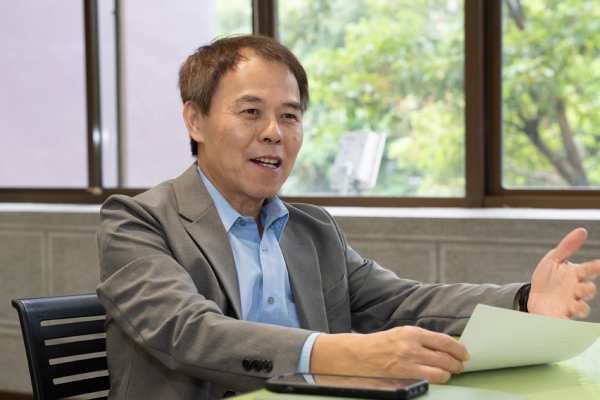
Professor Tsung-Min Hung centers on holistic health behavior management, building sustainable physical and mental balance from habit formation to emotional resilience.
He also uses his two books, “Breaking Inertia” and “So the Brain Can Be Trained This Way”, as teaching materials. These assist students in starting their self-management by stepping out of their comfort zones, while providing excellent training for frontal lobe functions to effectively stimulate and facilitate behaviors like thinking, memory, and decision-making. This formula has led many students from the corporate world to promote these concepts in their workplaces. It turns the culture of health and LOHAS from a personal practice into something that further influences organizational management and operations.
Technology and LOHAS Product Design: Not Just Creativity, But Responding to the Real Needs of the 50+
Furthermore, Chair Professor Tzyy-Yuang Shiang of the NTNU LOHAS EMBA translates the LOHAS concept into innovative practice. In the “Technology and LOHAS Product Design” course, he guides students to identify pain points from life experiences and subsequently develop product prototypes with market potential. From gadgets that improve the user experience for seniors to innovative proposals combining daily life and technology, these student works not only enter national competitions but also have the opportunity to be matched with the industry. “Their brainstorming has covered areas including wearable devices and IoT equipment,” Professor Shiang noted. He stated that because the 50+ generation possesses rich observation skills and life experience, they are highly suitable subjects for design innovation. The course concurrently introduces the concept of sustainability, hoping to contribute to the environment through material selection. Simultaneously, to broaden the horizons of NTNU EMBA students, the program organized the “LOHAS Master Lecture” series. Experts from various industries, both on and off-campus, are invited to share their insights, inspiring students’ cross-disciplinary inspiration and filling the learning journey with openness and possibilities.
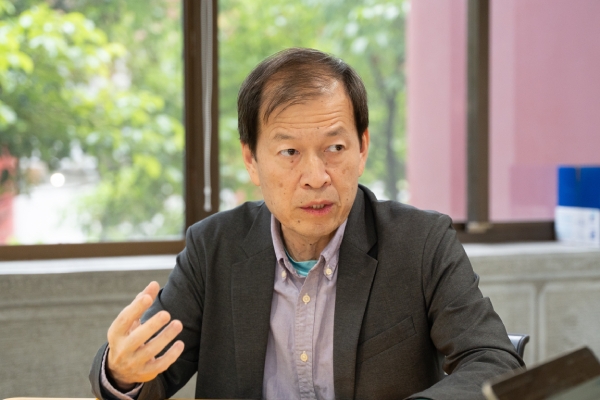
Professor Tzyy-Yuang Shiang guides students starting from life pain points to design innovative LOHAS products that meet the needs of the 50+ demographic.
Sports Protection and Health LOHAS: Making Management Not Just a Workplace Task, But a Lifestyle Attitude
After establishing physical and mental management and creative ideation, Professor and Deputy CEO of the NTNU LOHAS EMBA, Heng-Ju Lee, cleverly integrates professional sports training with daily health care. Through the “Sports Protection and Health LOHAS” course, he allows students to improve physical function in a correct and safe manner. “Maintaining correct exercise habits and good physical function is the best practice of LOHAS and sustainability”. Therefore, behind Professor Lee’s teaching, he is not merely sharing how to use foam rollers and resistance bands; he is implicitly planting correct concepts into students’ minds. Once they see results in self-management, they transform into the best spokespersons for their friends and workplaces.
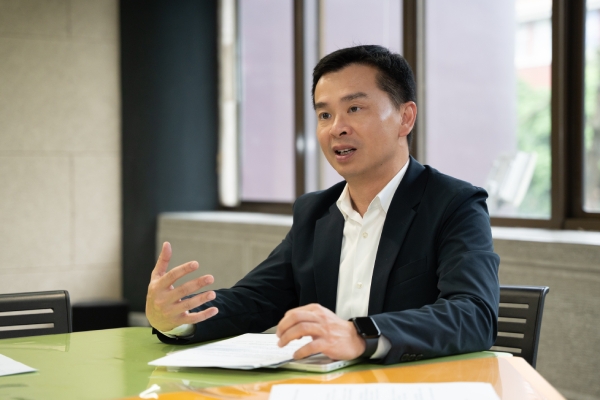
Professor Heng-Ju Lee combines sports protection with practical training, emphasizing the use of correct methods to build sustainable physical and mobility capabilities.
Beyond practical courses, Professor Lee also offers a “Management Practice Seminar”. Through corporate visits and local exploration activities, students go to the front lines to observe traditional, long-term care, and LOHAS industries in Taiwan and Japan. This prompts them to think about how to combine their personal expertise with the LOHAS spirit to develop innovative business application models. He emphasized: “Before learning to manage an enterprise, learn to manage yourself first”. Through the strengthening of physical and mobility capabilities, students establish healthy habits while simultaneously becoming more capable of influencing their families, workplaces, and even society, practicing a LOHAS spirit cultivated both inside and out. It is evident that throughout the learning journey of the NTNU LOHAS EMBA, the faculty and curriculum revolve around how to effectively unleash the LOHAS spirit within individuals, assisting students in correctly managing their physical and mental health using scientific methods. Professor Hung stated that only when individuals maintain a healthy body and mind can management start from the individual and extend to others. This is precisely the sustainable spirit and value that the NTNU LOHAS EMBA wants to emphasize, distinguishing itself in the market. From managing an enterprise to managing oneself, and from pursuing performance to practicing health, the NTNU LOHAS EMBA has created a learning path for the 50+ demographic that redefines the value of life. This is not just an EMBA program, but a profound journey of dialogue with life and dancing with the future.